
Going small in Bordeaux
Two organic wineries near Saint Emilion with big passion

It’s been about a month since we returned to Wisconsin from France. As I look out of the shop window, the park pavilion sits under a foot of snow. It’s bitter cold. The bike someone left behind our wine shop looks like an ice sculpture.
The wines at Chateau Grangey that we bought in early November, surrounded by golden vines under gray skies, just arrived. Pulling the bottles out of the box brought back memories of warmer fall days and one beautiful glass of wine after another.
We ended our month in France with three days in Bordeaux, one of which was spent on a sommelier-led tour of Saint Emilion and two nearby wineries. When given the chance, we prefer to visit small family wineries off the beaten path that produce wines we couldn’t access at home. This tour didn’t disappoint.
Neither winery had the grand chateaux that attract tourists. Their tasting rooms and wineries were modest — working farms, really. There was nothing ostentatious about them. They were all about the wine. I love when you get to hang out with small winemakers who aren’t in it to get on supermarket shelves. Their passion and commitment is nothing less than inspiring.
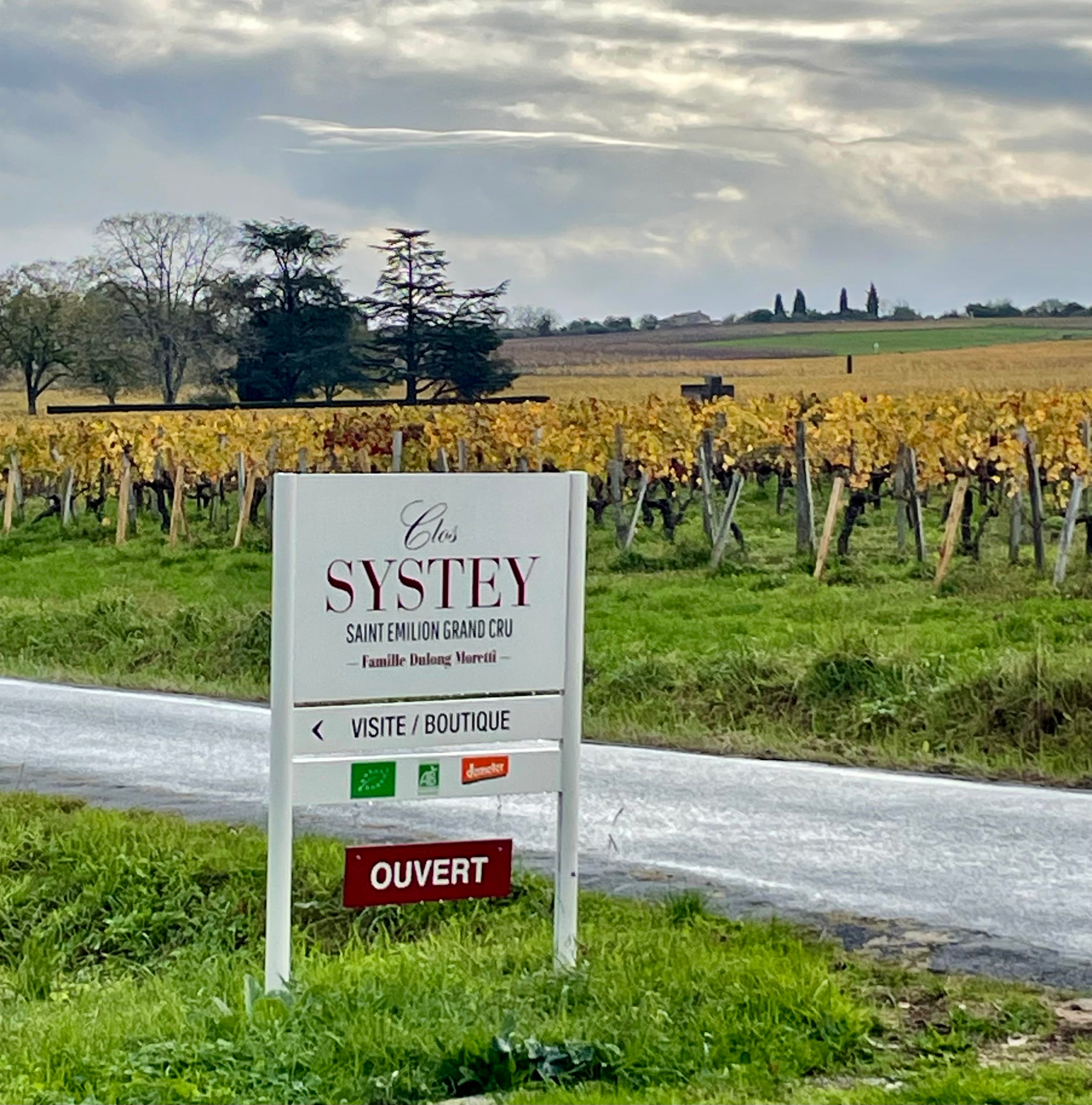
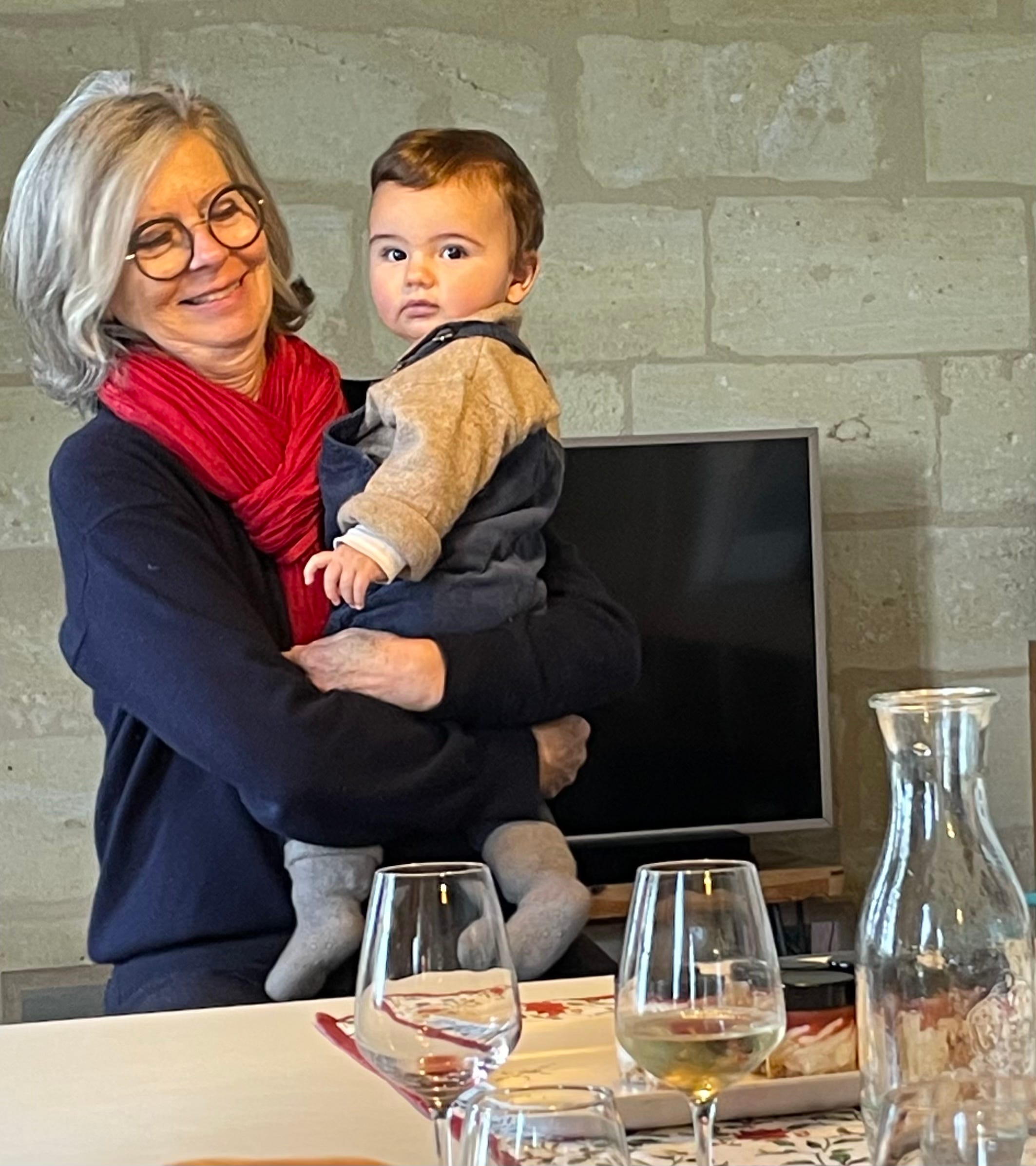
Chateau Clos Systey hosted us for a lunch of home-made leek soup, cheese and charcuterie, a tour, and, of course, a tasting. Founded in 2015 by oenologist Sylvia Dulong and Stéphan Grawitz, this two-hectare vineyard of biodynamically cultivated vines produces a Grand Cru as well as a fresher, fruitier Merlot/Cabernet blend fermented in stainless steel. The chateau is now run by Sylvia’s daughter Fanny and her husband Juan Moretti, as well as Fanny’s brothers, Paul and Adrien. On the day of our visit, Sylvia led our tour as Fanny and Juan were delayed with a doctor’s appointment for their young son.
Sylvia fretted about her English, but she conveyed her passion for producing exceptional wine using biodynamic principles beautifully. We sampled the 2015 Saint Emilion Grand Cru, a barrel-aged blend of Merlot, Cabernet Sauvignon and Cabernet Franc, and the 2023 S by Systey. I will admit to being more old-school in my taste and while the S was good for a fresher style of wine, we preferred Sylvia’s Grand Cru. It was elegant and complex with black fruit and peppery notes. A bottle went home in our suitcase. They also make a crémant with grapes grown off-site, but we didn’t have an occasion to try it.
Sylvie is a pioneer in Bordeaux. According to the Bordeaux Wine Council, only about 25 percent of Bordeaux wines come from certified organic vineyards. Even fewer are biodynamic. Bordeaux is a region of strong traditions, but the slow uptake of organic farming is also practical; the humid, maritime climate is conducive to mildew and there are limited organic methods at winemakers’ disposal to combat it. Still, consumer demand for organic wine is encouraging a quickening rate of adoption.
Fanny returned in time to serve us lunch and we got to coo over her adorable little boy, which was a bonus. After lunch, our group had a couple hours to wander the ancient cobbled streets of Saint Emilion. As an American, my brain still gets a bit fried contemplating the centuries of tradition that a town like Saint Emilion wears so casually. I had just come from three weeks in the Perigord, but this little village felt older and more primal than any of the other villages we visited.


Our small group ended the day at Chateau Grangey, located on just over six hectares between the northern slope of Saint-Christophe-des-Bardes and the Saint-Émilion plateau. Some of the vines are more than a century old and new plantings use the traditional method of massal selection from the oldest stocks to preserve the vineyard’s identity. There are records of wine being made on the land dating back to the 1750s.
Franck Moi is tending vines that his grandparents planted. The winery has been in the family for nearly 75 years. He also follows organic practices, not only for commercial reasons but for the health of his wife and children. He is on the path to biodynamic certification as well. Franck and his wife, Elodie, took over the winery in 2011 and renovated the buildings, modernized production, and added a tasting room. Franck experiments with aging his grapes in clay amphora, stainless steel, large oak casks and barrels, exploring different characteristics of merlot with each wine he makes.


Franck poured us Les 5 Parcels, a Merlot/Cabernet Franc blend from 10-50 year-old vines that was aged 12 months in tanks and barrels and the Chateau Grangey cuvée made from 50-70 year-old vines and aged 12 months in barrels and foundres. We were bowled over by the cuvée’s depth of flavor and satiny tannins. We sampled both the 2020 and 2021 vintages and couldn’t agree which one we liked more, so had three bottles of each shipped to us.
I’m looking forward to popping over one of those bottles to enjoy by the fire on one of the many frigid Wisconsin nights to come.

.
We also spent time in Ste.Emilion and stayed at a winery chateau producing organic wine, Clos Chante’Il Alouette. I also have purchased wine from Chateau Grangey . I have purchased the wine from a merchant, Mansur at Ste.Emilion Boutique wines. I loved st. Emilion.
.